

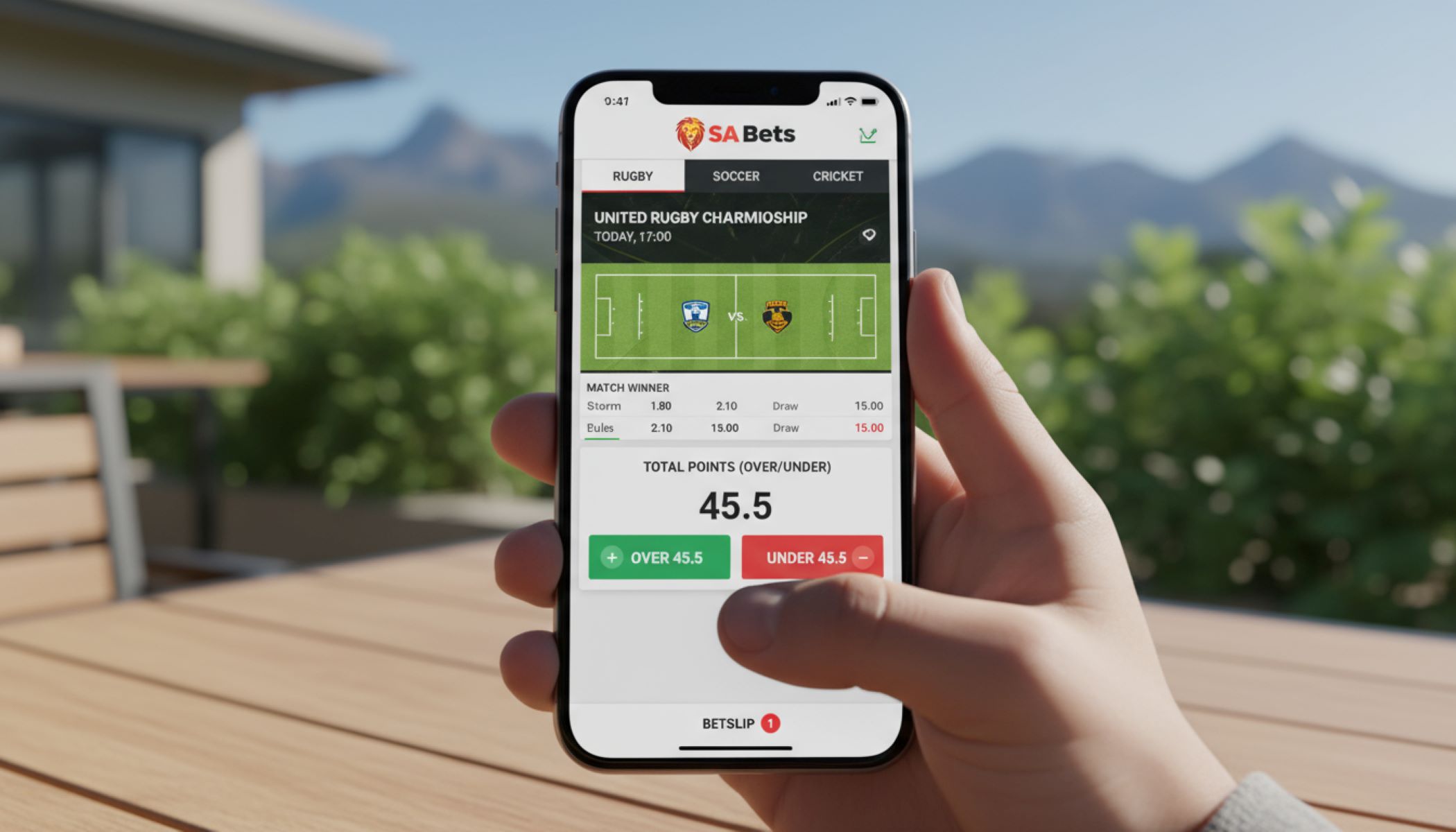
Understanding over/under bets in sportsbooks
Over/under betting, also known as totals betting, represents one of the most popular wagering options available to South African sports enthusiasts. Unlike traditional match-winner bets, this form of gambling focuses on whether the combined score or statistical outcome of a game will exceed or fall below a predetermined line set by the sportsbook. The beauty of over/under betting lies in its simplicity—you don’t need to predict which team will win, only whether the total action will be high or low.
South African bettors have embraced over/under markets across multiple sports, with football, rugby, and cricket leading the charge in terms of betting volume and variety. This betting style appeals to many because it carries a lower perceived risk compared to picking outright winners, while offering flexibility to wager on various statistics beyond just the final score. Throughout this comprehensive guide, you’ll discover how betting lines work, understand odds calculations, explore strategies for success, and learn which South African sportsbooks offer the most competitive over/under markets for your wagering needs.
What Is Over/Under Betting?
Over/under betting revolves around wagering on whether a combined score or specific statistic will exceed or fall below a sportsbook’s predetermined line. This betting format operates independently of the match result, focusing entirely on the total goals, points, runs, or other measurable outcomes rather than which team emerges victorious. The concept transforms any sporting event into a numbers game where bettors analyze offensive and defensive capabilities to predict scoring patterns.
In South Africa, over/under markets dominate soccer, rugby, and cricket betting, offering punters an alternative to the sometimes unpredictable nature of match-winner bets. The most common applications include total goals in Premier Soccer League matches, total points in Springbok rugby games, and total runs in Proteas cricket fixtures. Understanding key terminology is essential: the “line” represents the sportsbook’s projected total, while “over” and “under” represent your betting choices on whether the actual total will surpass or fall short of that line.
The appeal extends beyond traditional sports, with modern sportsbooks offering totals on corner kicks, yellow cards, individual player statistics, and even first-half or quarter-specific totals. This versatility allows bettors to find value in various aspects of a single game, creating multiple wagering opportunities that don’t depend on picking winners and losers.
How the Total Line Works
Sportsbooks establish total lines by analyzing historical data, team form, weather conditions, and other relevant factors to project a likely combined score. For example, a Premier Soccer League match might feature an over/under line of 2.5 goals, meaning bettors must decide whether both teams will combine for three or more goals (over) or two or fewer goals (under). The half-point system eliminates the possibility of ties, ensuring every bet has a clear winner.
The decimal system proves crucial in avoiding pushes, where the actual total matches the line exactly. Consider a simple example: if you bet over 2.5 goals and the match ends 2-1, you win because the combined three goals exceeds the 2.5 threshold. Conversely, a 1-1 result would mean under bettors collect their winnings since two total goals falls below 2.5.
Why Over/Under Betting Is Popular in South Africa
South African bettors gravitate toward over/under markets because they offer perceived lower risk compared to traditional win/lose propositions. A team can play poorly and still contribute to a high-scoring affair, or two strong teams might produce a defensive battle that favors under bettors. This flexibility appeals to punters who understand statistical trends better than team-specific factors like injuries or tactical matchups.
The format’s popularity on platforms like Betway, Lottoland, and Sunbet stems from its suitability for accumulator bets, where multiple over/under selections can be combined for enhanced odds. Additionally, the variety of available markets—from total goals and corners to cards and individual player statistics—provides numerous opportunities within a single match, allowing bettors to diversify their approaches and potentially find value where traditional markets might be efficiently priced.
Common Over/Under Markets in SA Sportsbooks
South African sportsbooks offer an extensive range of over/under markets tailored to local preferences and international sports. Soccer dominates with popular lines like 0.5, 1.5, and 2.5 goals, while rugby and cricket feature higher thresholds reflecting their typically higher-scoring nature. The diversity extends beyond basic totals to include niche markets such as corner kicks, yellow cards, and first-half specific totals, providing multiple angles for strategic betting.
Understanding winning conditions across different markets proves essential for successful totals betting. Each line carries specific requirements, and bettors must grasp exactly what constitutes a winning wager before placing their stakes. The following comparison illustrates how various over/under markets function across popular South African sports.
| Market | Line | Over Wins When | Under Wins When | Typical Sport |
|---|---|---|---|---|
| Total Goals | 2.5 | 3+ goals scored | 0-2 goals scored | Soccer |
| Total Points | 42.5 | 43+ points scored | 0-42 points scored | Rugby |
| Total Runs | 280.5 | 281+ runs scored | 0-280 runs scored | Cricket |
| Total Corners | 9.5 | 10+ corners taken | 0-9 corners taken | Soccer |
| Total Cards | 4.5 | 5+ cards shown | 0-4 cards shown | Soccer |
| First Half Goals | 1.5 | 2+ first half goals | 0-1 first half goals | Soccer |
Over/Under Goals Betting in Football
Over/Under 2.5 goals represents South Africa’s most popular totals market, striking an ideal balance between risk and reward that appeals to both casual and serious bettors. This line typically offers competitive odds on both sides, reflecting the fact that Premier Soccer League matches frequently produce totals near this threshold. The 2.5 line captures the sweet spot where tactical battles and attacking flair intersect, making it a favorite among SA punters who understand local football dynamics.
Lower lines like Over/Under 0.5 goals cater to risk-averse bettors, with over bets winning whenever any goal is scored during the match. This extremely conservative approach rarely offers attractive odds but provides near-certainty in attacking leagues. The 1.5 goals line requires at least two goals for over bettors, representing a middle ground between the ultra-safe 0.5 and the more challenging 2.5 threshold.
The risk-reward profile of the 2.5 goals line makes it particularly attractive for accumulator betting, where multiple selections can be combined without the extreme variance associated with higher totals. South African bettors often find value in this market when analyzing team form, head-to-head scoring histories, and situational factors like league position and motivation. Understanding that roughly 60% of professional football matches worldwide produce over 2.5 goals provides a baseline for evaluating odds and identifying potential value.
Understanding Over/Under Odds and Payouts
Over/under odds in South African sportsbooks typically appear in decimal format, with common lines like 2.5 goals often priced around 1.91 for both over and under selections. This pricing structure reflects the sportsbook’s built-in profit margin, known as the “vig” or “juice,” which ensures the house maintains an edge regardless of betting patterns. Understanding this mathematical reality helps bettors recognize when odds deviate from fair value, potentially indicating betting opportunities.
The decimal odds system favored by SA bookmakers makes payout calculations straightforward: multiply your stake by the odds to determine your total return, including the original wager. For example, a R100 bet at 1.91 odds returns R191 if successful, providing R91 in profit. This transparency allows bettors to quickly compare potential returns across different markets and sportsbooks.
Odds fluctuation occurs based on betting volume and sharp money movement, with sportsbooks adjusting lines to balance their liability. Early odds often provide the best value before public betting patterns influence the numbers. Savvy bettors monitor these movements to identify when the market has overreacted to news or trends, creating opportunities to bet against public sentiment at inflated prices.
Reading Decimal Odds for Totals
South African sportsbooks predominantly display odds in decimal format, making it easy for bettors to calculate potential returns without complex conversions. The decimal number represents the total return per rand wagered, including your original stake. This system eliminates confusion often associated with fractional or American odds formats, allowing for quick mental calculations during live betting scenarios.
A practical example illustrates the simplicity: backing over 2.5 goals at decimal odds of 1.95 with a R100 stake returns exactly R195 if successful. This R95 profit represents a 95% return on investment, which can be easily compared against other betting opportunities. The decimal system also facilitates accumulator calculations, as multiple odds simply multiply together to determine the combined payout.
What Is a Push and How to Avoid It
A push occurs when the actual game total matches the betting line exactly, resulting in all wagers being refunded rather than won or lost. For instance, if you bet on over/under 42 points in a rugby match and the final combined score equals precisely 42 points, your stake is returned without profit or loss. This scenario frustrates bettors who correctly predicted the general scoring range but fell victim to the exact line placement.
Most South African sportsbooks minimize push situations by using half-point lines (like 2.5 goals or 42.5 points) that make ties mathematically impossible. This practice, while eliminating pushes, sometimes creates unnatural betting lines that don’t align with common final scores. Smart bettors recognize when whole-number lines might be vulnerable to pushes and adjust their strategies accordingly, sometimes seeking better value on the half-point alternatives.
How to Place Over/Under Bets at South African Sportsbooks
Placing over/under bets at South African sportsbooks follows a straightforward process that begins with account registration and extends through market selection and stake determination. Modern platforms like Betway and Sunbet have streamlined this experience, making it accessible even for newcomers to sports betting. The key lies in understanding each step and preparing properly before placing your first totals wager.
Most established SA sportsbooks offer comprehensive over/under markets across multiple sports, with user-friendly interfaces that clearly display available lines and corresponding odds. The process typically involves several standard steps that ensure compliance with local regulations while providing a smooth betting experience.
- Complete account registration with FICA-compliant identification documents and personal details verification
- Make your initial deposit using preferred payment methods such as EFT, Ozow, or e-wallets
- Navigate to your chosen sport and locate the over/under or “totals” betting markets
- Select your preferred line (e.g., over 2.5 goals) and review the displayed odds
- Enter your desired stake amount and confirm the bet slip details are correct
- Submit your wager and receive confirmation with your unique bet reference number
- Monitor the game progress and await settlement based on the final statistical outcome
Registering and Depositing at SA Sportsbooks
Account registration at South African sportsbooks requires FICA-compliant documentation, including valid identification and proof of residence, to satisfy regulatory requirements. This verification process typically takes 24-48 hours but must be completed before any withdrawals can be processed. Most operators accept South African ID documents, passports, and utility bills as standard verification materials.
Deposit options cater specifically to South African banking preferences, with EFT transfers, Ozow instant payments, and popular e-wallets like PayU providing convenient funding methods. Minimum deposit requirements generally range from R50 to R100, making the platforms accessible to bettors with modest bankrolls. Many sportsbooks offer deposit bonuses specifically for new customers, though these often come with wagering requirements that may not suit all over/under betting strategies.
Strategies for Successful Over/Under Betting
Successful over/under betting requires a systematic approach that combines statistical analysis, situational awareness, and disciplined bankroll management. Unlike match-winner betting, totals wagering rewards bettors who can accurately assess scoring environments rather than team superiority. The most effective strategies focus on identifying games where the sportsbook’s line doesn’t accurately reflect the likely scoring range based on measurable factors.
Value identification becomes paramount in over/under betting, as the relatively efficient nature of these markets means profitable opportunities often arise from superior analysis rather than obvious mismatches. Professional bettors typically employ multiple analytical frameworks to evaluate potential wagers, combining quantitative data with qualitative insights about team tactics, motivation, and external conditions.
- Research team scoring averages both home and away, paying special attention to recent form trends
- Analyze head-to-head scoring histories between specific opponents over multiple seasons
- Consider external factors like weather conditions, pitch quality, and referee tendencies
- Evaluate tactical matchups, particularly how offensive and defensive styles might interact
- Monitor team news for key player absences that could significantly impact scoring potential
- Track line movements to identify sharp money and public betting patterns
- Maintain detailed records of your betting performance to identify strengths and weaknesses
Analyzing Team Statistics and Trends
Statistical analysis forms the foundation of successful over/under betting, with key metrics including goals per game, defensive records, home versus away performances, and recent form trends. Premier Soccer League teams often exhibit distinct patterns that persist throughout seasons, making historical data valuable for predicting future scoring ranges. Tools like Opta Sports provide detailed statistics that professional bettors use to identify teams that consistently produce high or low-scoring matches.
Home and away splits prove particularly crucial in South African football, where travel distances and crowd support significantly impact performance levels. Teams like Kaizer Chiefs and Orlando Pirates often produce different scoring patterns at home versus away, information that shrewd bettors incorporate into their analysis. Understanding these splits helps identify situations where sportsbooks might have set lines based on overall averages rather than situation-specific data.
League-specific scoring norms provide essential context for evaluating individual game totals. The Premier Soccer League typically produces different scoring rates than European leagues, and successful bettors adjust their expectations accordingly. Tracking seasonal trends also reveals how scoring patterns evolve throughout campaigns, with early-season matches often producing different totals than crucial end-of-season encounters where defensive tactics might dominate.
External Factors Affecting Totals
Weather conditions significantly impact scoring in outdoor sports, with rain, wind, and extreme temperatures often leading to lower-scoring affairs than anticipated. South African football particularly suffers in wet conditions, where poor pitch surfaces and reduced ball control typically favor under bettors. Professional bettors monitor weather forecasts closely and adjust their expectations when conditions might suppress normal scoring patterns.
Cup competitions generally produce different scoring dynamics than league matches, with knockout pressure often leading to more cautious tactical approaches. Teams protecting leads or avoiding elimination frequently adopt defensive strategies that result in lower totals than their regular league encounters might suggest. Understanding these competitive contexts helps bettors identify when historical scoring averages might not apply to specific situations.
Comparing Over/Under Options Across SA Sportsbooks
South African bettors benefit from a competitive sportsbook landscape that offers varying odds, market selections, and features for over/under betting. Platforms like Betway, Lottoland, and Sunbet each provide unique advantages, from comprehensive market coverage to mobile app functionality and promotional offers. Comparing these options helps bettors maximize their potential returns and find platforms that best suit their specific betting preferences.
The following comparison highlights key differences between major South African sportsbooks, focusing on over/under betting features that matter most to serious totals bettors. These variations can significantly impact long-term profitability, making platform selection a crucial strategic decision.
| Sportsbook | Over 2.5 Odds Example | Markets Offered | Mobile App | Unique Feature |
|---|---|---|---|---|
| Betway | 1.91 | Comprehensive | Excellent | Live betting interface |
| Sunbet | 1.89 | Extensive | Very Good | Early odds release |
| Lottoland | 1.93 | Standard | Good | Accumulator bonuses |
| Hollywoodbets | 1.90 | Comprehensive | Excellent | Local sports focus |
Combining Over/Under Bets with Other Markets
Accumulator betting allows skilled bettors to combine multiple over/under selections across different matches or markets, potentially creating substantial payouts from modest stakes. For example, combining over 2.5 goals in three different Premier Soccer League matches at odds of 1.90 each produces combined odds of approximately 6.86, turning a R100 stake into R686 if all selections win. This strategy appeals to bettors who have strong convictions about multiple games and want to maximize their potential returns.
However, accumulator betting significantly increases risk, as every selection must win for the bet to succeed. Many experienced bettors prefer smaller accumulators (2-3 selections) or combine over/under bets with match-winner markets to create more balanced risk profiles. The key lies in understanding that while potential rewards increase exponentially, so does the probability of losing the entire stake if any single selection fails.
Advantages and Disadvantages of Over/Under Betting
Over/under betting offers distinct advantages and challenges that appeal differently to various bettor types and risk profiles. Understanding these trade-offs helps determine whether totals betting suits your gambling preferences and analytical strengths. The format’s simplicity masks some complexities that can either enhance or diminish your betting success depending on your approach.
The following comparison outlines the primary advantages and disadvantages that South African bettors should consider when evaluating over/under markets as part of their overall betting strategy.
| Advantages | Disadvantages |
|---|---|
| No need to predict match winners | Sportsbook juice reduces profit margins |
| Statistical analysis more straightforward | Late-game volatility can reverse fortunes |
| Perfect for accumulator betting | Limited to statistical outcomes only |
| Multiple markets per game available | Requires extensive data analysis |
| Lower variance than exotic bets | Push scenarios possible with whole numbers |
| Weather and tactics easily factored | Market efficiency limits value opportunities |
| Works across all major sports | Emotional attachment to teams irrelevant |
When to Bet Over vs. Under
Betting over typically makes sense when offensive-minded teams meet in good weather conditions with tactical setups that favor attacking play. Premier Soccer League matches featuring teams like Mamelodi Sundowns playing at home against defensively weak opponents often create ideal “over” scenarios. High-stakes matches where both teams need points can also produce goal-fests, particularly late in seasons when defensive caution gives way to attacking desperation.
Under betting becomes attractive when key attacking players are absent, weather conditions are poor, or tactical matchups suggest a cagey affair. Kaizer Chiefs versus Orlando Pirates derbies historically trend toward lower-scoring encounters despite the attacking talent involved, as the pressure and intensity often lead to cautious approaches from both sides. Cup finals and relegation battles frequently favor under bettors due to the high stakes involved.
Contextual factors often prove more important than pure statistical analysis when choosing between over and under. A team’s recent form might suggest high-scoring games, but facing a well-organized defense in poor weather conditions could easily produce a low-scoring encounter. Successful totals bettors learn to weight these situational factors appropriately rather than relying solely on historical averages.
Bankroll Management for Totals Betting
Effective bankroll management for over/under betting involves staking between 1-3% of your total betting fund per wager, depending on your confidence level and the odds involved. This conservative approach ensures that even extended losing streaks won’t devastate your betting account, while allowing for meaningful profits during successful periods. Many professional bettors use flat staking (the same amount per bet) to eliminate emotional decision-making from their stake sizing.
Tracking your betting performance becomes crucial for identifying patterns in your success and failure rates. Detailed records should include not just wins and losses, but also the reasoning behind each bet and the specific factors that influenced your decision. This data helps refine your approach over time and reveals whether certain types of over/under bets consistently provide better results than others.
Common Mistakes to Avoid in Over/Under Betting
Over/under betting attracts many novice punters due to its apparent simplicity, but several common mistakes can quickly drain bankrolls and frustrate even experienced bettors. Understanding these pitfalls helps develop a more disciplined approach that focuses on long-term profitability rather than short-term excitement. The most successful totals bettors typically avoid emotional decision-making and maintain systematic approaches to their wagering.
Recognizing and avoiding these frequent errors significantly improves your chances of long-term success in over/under betting markets. Most mistakes stem from inadequate preparation, emotional decision-making, or unrealistic expectations about the ease of beating these markets consistently.
- Betting emotionally on favorite teams rather than analyzing objective scoring data
- Chasing losses by increasing stake sizes after unsuccessful wagers
- Ignoring external factors like weather, team news, and tactical considerations
- Focusing only on recent form while overlooking longer-term statistical trends
- Betting on too many games without proper research and analysis
- Failing to shop for the best odds across different sportsbooks
- Misunderstanding how decimal odds and payouts actually work
Responsible Gambling and Over/Under Bets
Responsible gambling practices become essential when engaging with over/under betting, particularly given the format’s suitability for accumulator bets that can quickly escalate stake sizes. South African resources like the National Responsible Gambling Programme (NRGP) provide support for bettors who develop problematic gambling behaviors. Most licensed sportsbooks also offer self-exclusion tools and deposit limits that help maintain control over your betting activities.
Setting personal win and loss limits before beginning any betting session helps maintain perspective and prevents emotional decision-making during both winning and losing streaks. Many successful bettors establish monthly betting budgets and walk away once those limits are reached, regardless of their recent performance. This disciplined approach treats betting as entertainment with costs rather than as a guaranteed income source, leading to healthier long-term relationships with sports wagering.